The Pollution We Breathe Without Seeing

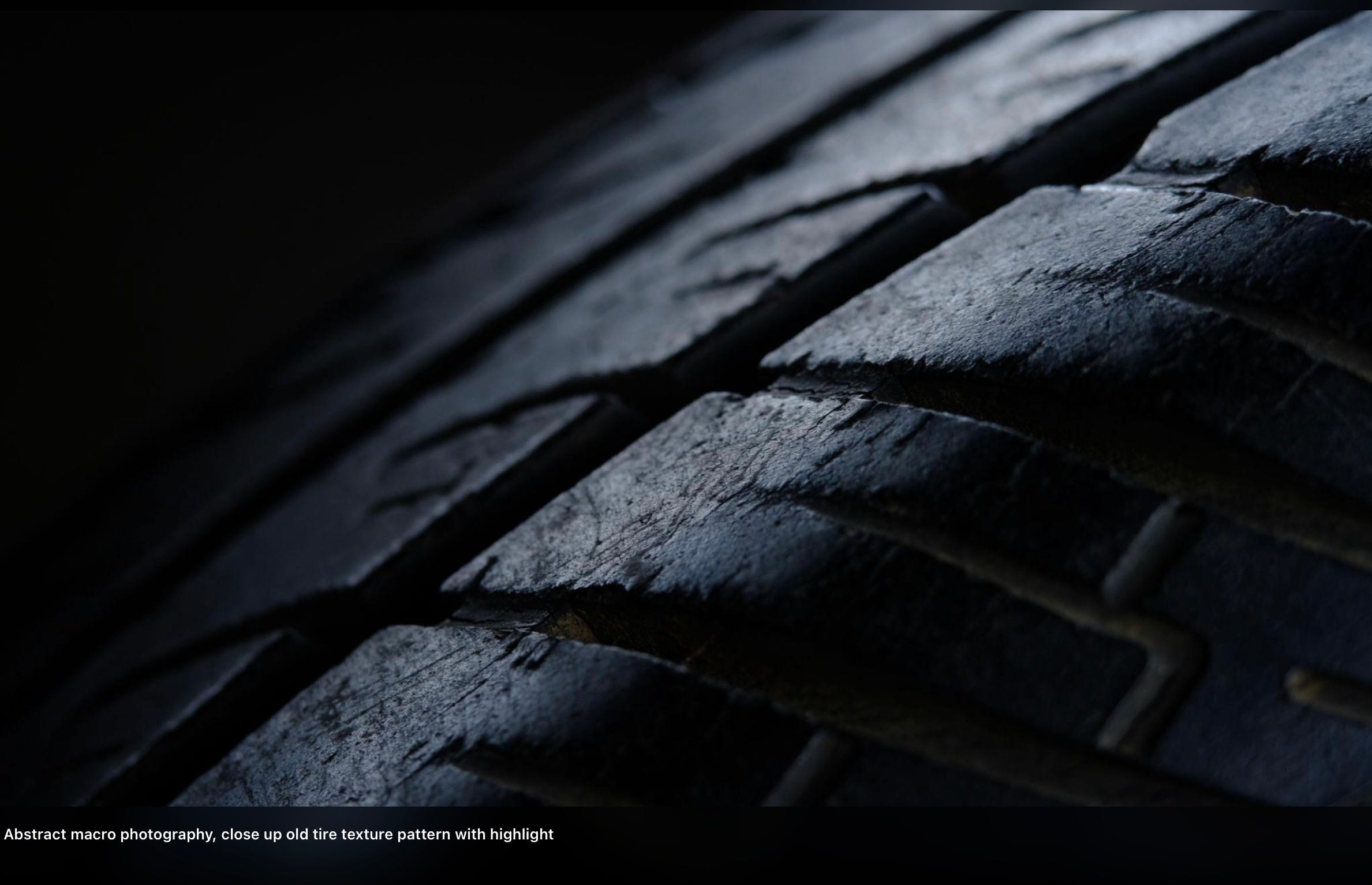
Every mile leaves something behind.
The most common microplastic in your body probably didn’t come from the ocean.
It came from the road.
Every time a vehicle moves, it sheds tiny fragments of synthetic rubber — particles that become airborne, drift, and settle into our lungs and bloodstream.
When people imagine microplastics, they picture oceans. Bottles. Bags. Floating islands of trash. But one of the largest sources isn’t packaging at all. It’s tires.
Every time a vehicle moves, it sheds tiny fragments of synthetic rubber — particles loaded with heavy metals, additives, accelerants, and petroleum-derived chemicals. These particles are small enough to float, drift, and settle deep into the lung tissue of anyone living near a busy road.
For decades, this was invisible. Now the evidence is piling up.
What science is showing us
Vehicles are constant microplastic factories. Tire wear is now one of the largest sources of microplastics on Earth — larger than bags or straws by orders of magnitude.
A 2020 Nature Communications study found that the smallest particles become airborne, carried by turbulence around moving vehicles.
Many are PM2.5-sized or smaller — meaning they can travel deep into the lungs and pass into the bloodstream.
A 2023 Science Advances study detected nanoplastics and tire-derived particles inside human lung tissue. Not on clothing. Not on skin. Inside.
Tire particles don’t just enter our lungs; they cross membranes we assumed were impermeable.
But air isn’t the only pathway
Most of the total mass of tire microplastics is washed off roads by rain. That runoff moves into storm drains, rivers, estuaries, and coastal waters.
There, they become:
endocrine disruptors
fish toxins
bioaccumulating fragments
carriers for other pollutants
The journey splits: water carries the bulk; air carries danger.
Because a gram of plastic in a stream is harmful. A gram in your lungs is catastrophic.
The invisible proximity of risk
Millions of people live within 200 meters of a major roadway — the exposure zone where airborne tire particles are the most concentrated. And unlike wildfire smoke or industrial smog, tire pollution is:
constant
odorless
unmonitored
unregulated
chemically complex
If an oil refinery emitted this cocktail, it would be a national scandal. But emitted from millions of vehicles, it becomes “traffic.” The pollution is normalized by scale.
Why we don’t talk about it
Because the solution requires something our culture refuses to consider: fewer vehicles, fewer miles traveled, fewer roads — less.
Regulating plastic straws causes no political pain. Regulating tires would mean confronting the structure of our cities, our commutes, our freight system, our built environment. So we pretend the danger isn’t there. The microplastics are still entering our lungs.
A quiet public-health crisis
If we discovered today that smoke from tires caused lung inflammation, DNA damage, endocrine disruption, and immune dysregulation, we’d have a national emergency. But because the source is silent and decentralized, it slips under the threshold of outrage.
We inhale it. Our children inhale it. The ecosystems around our roads inhale it. And we call it progress.
The real question isn’t “Are microplastics harmful?”
We built a civilization where harm is not released in accidents, but shed continuously through ordinary use. Like most environmental damage, tire microplastics do not cause failure immediately. They accumulate quietly until tolerance is exhausted — and then consequences appear suddenly.
In an age obsessed with climate solutions, tire microplastics are a reminder of a deeper truth: We are an industrial species that externalizes harm into every layer of the biosphere, including our own bodies.
What we refuse to name, we continue to inhale.
Tire microplastics are not an accident or a side effect. They are an inheritance. Long after traffic thins or civilizations change, the particles shed from today’s movement will remain embedded in soils, sediments, and living tissues. What looks like a public-health problem is also a geological one — a slow alteration of the substrate on which future ecosystems and future societies must function.
Excellent essay, Lyle! Thanks for writing about this important matter.
In addition to the source of microplastics, the chemical 6-PPD, used as a tire wear preventative, converts to 6-PPD quinone when exposed to atmospheric ozone. The microplastics along with the 6-PPD quinone entering streams either directly adjacent to roadways or via stormwater collection, has been shown to be lethal to coho salmon within hours of exposure. Toxicity has also been connected with other aquatic organisms.
As our friends at Dupont used to advertise, "Better Things for Better Living...Through Chemistry"! 👩🏻🔬☠️
At the risk of adding insult to injury, electric vehicles literally chew through tires, at least 30% faster than ice vehicles.
There are some good statistics from the University of Auckland embedded below for anyone interested.
https://kevinhester.live/2024/12/17/microplastics-changing-earths-climate-from-the-depths-of-the-oceans-across-fertile-lands-and-forests-high-up-into-the-atmosphere/