The Orders No One Gives
What environmental agencies taught me about invisible boundaries

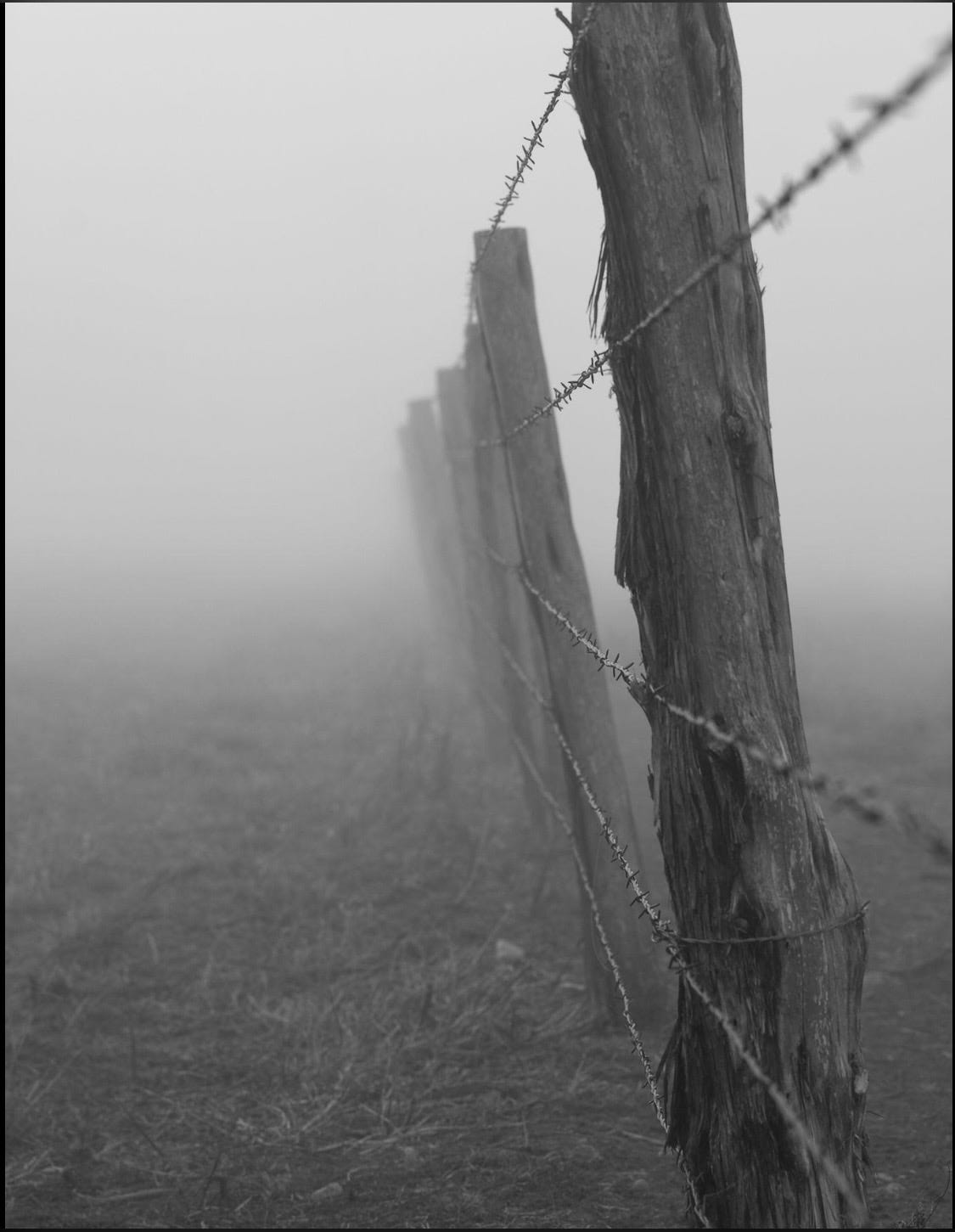
Most boundaries inside institutions are never clearly marked.
Watching the current media storm around a television host being warned off a political interview, I’m struck by how novel it seems to many people — as if this kind of pressure represents a new threshold.
It isn’t.
It’s simply visible.
In environmental agencies, universities, and scientific institutions, this dynamic has operated quietly for decades. Not through explicit censorship or dramatic directives, but through something far more subtle: the gradual internalization of risk.
People imagine suppression as an order — a memo, a call, a clear instruction not to proceed. But that’s rarely how systems work. The most effective constraints are the ones that never have to be spoken.
They live in the air.
Staff learn which analyses will trigger scrutiny. Scientists learn which conclusions will be labeled “advocacy.” Managers learn what will complicate budgets or invite oversight. Over time, boundaries move inward without anyone needing to push them.
No one says “don’t go there.”
People simply stop going there.
This is not conspiracy. It is adaptation.
Institutions, like ecosystems, respond to pressure by narrowing variability — reducing risk by reducing range. They trade openness for stability, or what appears to be stability.
And for a long time, it works.
Reports still get written. Projects still move forward. The structure remains intact. From the outside, everything looks functional.
But something essential has already begun to erode: the capacity to operate freely.
What disappears first is not action — it is amplitude.
The range of acceptable questions shrinks. Space for uncertainty narrows. The willingness to explore uncomfortable conclusions fades. Debate becomes quieter, safer, more predictable.
From the outside, this looks like professionalism.
From the inside, it feels like learning the edges of an invisible fence.
For much of my career, it felt like straddling that fence — pushing as hard as I could for wildlife and ecosystems without falling off. My balance was not always perfect.
By the time explicit pressure arrives — a legal warning, a directive, a public controversy — behavior has already adjusted. The system has taught itself how to avoid friction.
This is why moments that appear shocking to the public often feel familiar to those who have worked inside large institutions. The mechanism isn’t new. Only the visibility is.
Ecological systems follow the same pattern.
Collapse rarely begins with dramatic loss. It begins with thinning — fewer ways to absorb shock, fewer backups, less room to bend without breaking.
Institutions rarely silence people outright. They don’t have to. The atmosphere does the work. Everyone learns which questions advance careers and which ones end them. Over time, truth becomes less a matter of evidence than of permission.
Like ecosystems, institutions can persist long after their functional range has narrowed — after their ability to respond to change has flattened.
They don’t fail when someone gives an order. They fail when people begin anticipating orders that never come.
Over time, self-censorship replaces censorship. Risk avoidance replaces curiosity. Stability replaces resilience.
And because nothing appears broken, the change goes largely unnoticed.
Until one day, a visible event reveals what has long been underway.
What looks like sudden suppression is often just the moment when an invisible boundary becomes visible.
This dynamic is not unique to journalism, government, or science.
It is how complex systems under pressure adapt.
And like ecological systems, institutions can persist for a long time after their capacity for renewal has begun to fade.
That is the part we rarely recognize — not when the first order is given, but when the range of possible questions quietly narrows.
That is where the real change begins.
This dynamic is easiest to see in hindsight — in the small adjustments that seemed reasonable at the time.
In the 1990s, colleagues and I would quietly slip out to conduct bat surveys when a supervisor was away. Producing environmental analysis was seen as more important than knowing whether imperiled species were still there. The institution still functioned. Reports were written. Boxes were checked. But its ability — and increasingly its willingness — to see what was happening on the ground had already narrowed.
Like ecosystems without pulses, it persisted, but within a shrinking range of response.
Systems rarely collapse because people stop caring.
They collapse because caring quietly becomes unsafe.
By the time that shift becomes visible, the boundaries have already moved.
That’s how it works, ecologically and politically, Lyle, as you say. It’s why The Empire we live under is attacking Iran today.
Yes, this is thought-provoking and disturbing essay. The politically radical American physicist, Geoff Schmidt, argued in his book, ‘Disciplined Minds’ (Schmidt , 2000) that a key part of the training and education of middle class professionals is to develop the capacity to think and create strictly within the political framework desired by corporate or government employers. Schmidt gives the name ‘assignable curiosity’ to this capacity, which is largely unspoken and instinctively understood by every employee. Schmidt’s analysis helps to explain why so few ‘defence and surveillance systems’ engineers, for example, worry about the uses to which their efforts are put, and why so few psychologists worry about the social causes of personal distress, and instead concentrate on promoting individual and not very effective psychological therapies, and so on, for a vast range of professions. Schmidt’s analysis suggests that the problem of employee conformity and self-censorship is even more pervasive than you suggest, Lyle, because it begins in school and continues through university education. Economic recession and competition for decently paying jobs will only increase the timidity of any employee tempted to speak truth to power.