Declaring War—on the Environment
The ecological consequences of conflict that almost no one talks about

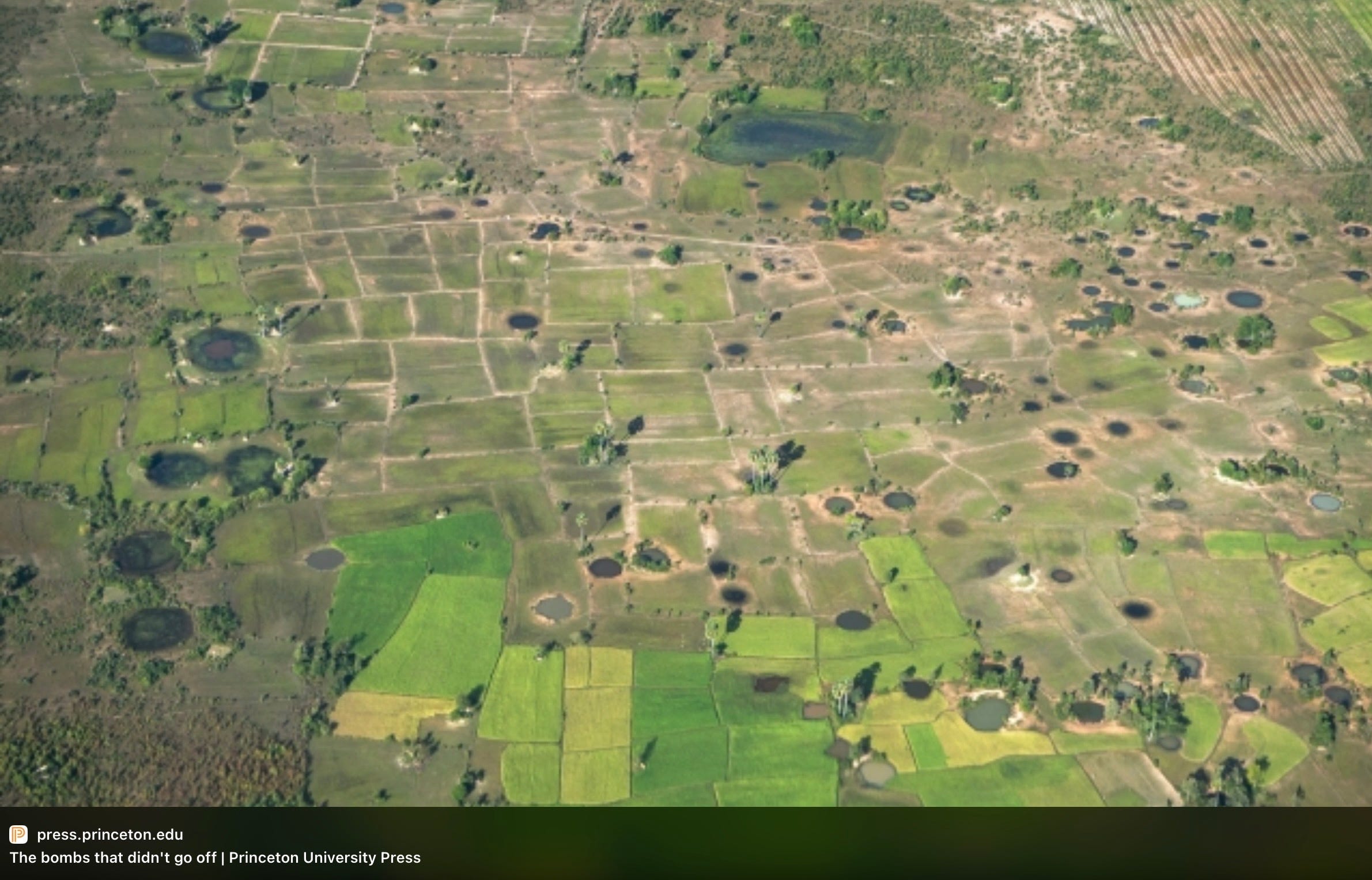
Modern battlefields resemble industrial extraction sites. Soil, water, and ecosystems absorb the damage long after the fighting stops.
War is usually described in human terms.
But every war also unfolds across living landscapes.
War is usually described in human terms—casualties, refugees, cities destroyed.
But every conflict also unfolds across living landscapes.
Forests burn. Rivers are contaminated. Wildlife disappears. Soils are scarred by craters and heavy metals. Entire ecosystems are pushed into states from which they may not recover.
Yet the environmental dimension of war is rarely discussed. Media coverage focuses on human suffering and infrastructure loss, while the biosphere absorbs damage that often goes unmeasured and largely unrecorded.
The battlefield is only the visible part of war. The ecological damage extends far beyond it.
War is not only a humanitarian catastrophe.
It is an ecological one.
Across history, conflicts have repeatedly reshaped landscapes and altered ecosystems at scales comparable to major natural disturbances. But unlike hurricanes, fires, or floods, the ecological consequences of war are seldom treated as environmental events. They exist in a blind spot—visible to those who study landscapes, but largely absent from public discussion.
Several ecological consequences of war illustrate how deeply conflict alters the living world.
1. War Creates Instant Industrial Landscapes
Modern warfare concentrates industrial activity into small areas at extraordinary intensity.
Armored vehicles churn and compact soils. Artillery fragments scatter metals across landscapes. Military vehicles compress ground that once absorbed water and supported vegetation. Explosions leave craters that alter drainage patterns and fragment habitats.
These impacts resemble mining operations more than traditional battlefields. The land is not simply disturbed—it is industrialized.
In many conflict zones, soils, water sources, and coastal waters become contaminated with lead, mercury, explosives residues, and fuel. These pollutants can persist for decades or centuries, altering plant communities and entering food webs.
Long after fighting stops, landscapes often remain chemically altered.
2. War Disrupts the Biological Memory of Landscapes
Ecosystems store their history in soils, seed banks, and biological communities. War damages all three.
Bombardment strips vegetation. Fires destroy forests and grasslands. Heavy machinery crushes soil structure that took centuries to form.
Once that structure is lost, ecosystems lose part of their ability to rebuild themselves. Vegetation may return, but it is often composed of different species adapted to disturbed ground. Nutrient cycles shift. Soil organisms decline. Water infiltration that recharges groundwater aquifers is reduced.
What returns after war is rarely the ecosystem that existed before it.
War erases ecological memory.
3. Conflict Zones Become Ecological Blind Spots
When war begins, environmental monitoring often stops.
Scientists leave. Research programs collapse. Wildlife surveys cease. Pollution monitoring disappears. Protected areas lose staff and enforcement.
As a result, ecosystems within conflict zones effectively vanish from scientific observation.
Species declines—and even extinctions—may go unrecorded. Illegal logging, mining, and hunting expand without oversight. Rivers, streams, and wetlands may become contaminated without anyone measuring the damage.
Entire regions of the biosphere can slip into data silence during conflict—places where ecological damage occurs but no one is watching.
4. War Alters Wildlife Populations in Complex Ways
Conflict can both devastate wildlife and temporarily protect it.
In some areas, warfare drives large animals to local extinction through hunting, habitat destruction, or displacement. Poaching often increases as armed groups finance operations through wildlife products.
But in other places, depopulation of rural areas can briefly reduce agricultural pressure. Croplands are abandoned. Roads become less traveled. Some wildlife populations expand in the absence of people.
These temporary refuges rarely last. When conflict ends, reconstruction, extraction, and renewed settlement often arrive quickly, compressing wildlife back even further into shrinking habitat.
War therefore produces ecological whiplash—periods of sudden release followed by intensified pressure.
5. The Global Military System Operates Outside Environmental Accounting
Perhaps the least discussed ecological consequence of war is the scale of the military system itself.
Modern militaries are among the largest industrial enterprises on Earth. They consume enormous quantities of fossil fuels, metals, chemicals, and manufactured materials. Fighter jets, naval fleets, armored vehicles, and weapons production all carry substantial environmental footprints.
The fuel consumption alone is staggering. Modern militaries are among the largest institutional consumers of fossil fuel on Earth. Modern combat aircraft burn thousands of gallons of fuel per hour, while global military logistics require fleets of ships, trucks, and aircraft operating continuously.
Yet military emissions and pollution are often poorly reported or partially excluded from international climate accounting frameworks—a legacy of political exemptions written into early global climate agreements.
This creates a strange paradox.
One of the largest industrial systems on Earth operates largely outside the environmental scrutiny applied to other industries.
War as an Ecological Force
War does not merely damage ecosystems locally. It amplifies nearly every driver of ecological decline simultaneously.
It accelerates resource extraction. It expands fossil fuel consumption. It disrupts land management and environmental governance. It pushes landscapes into states from which recovery becomes difficult or impossible.
And yet the ecological dimension of war remains largely invisible in public discourse.
This invisibility reflects a broader pattern.
Humans tend to perceive environmental change only when it occurs gradually and within the boundaries of an ordinary human life—forests thinning, rivers warming, wildlife disappearing over decades.
War, like floods and earthquakes, is treated as a temporary emergency, something separate from the environmental systems it reshapes.
But the biosphere does not experience war as an emergency.
It experiences it as disturbance.
And like all disturbances, the effects accumulate.
A Missing Piece of Environmental Awareness
Environmental discussions often focus on agriculture, industry, energy, and climate. These forces matter enormously, but they are not the only ways humans reshape the planet.
War is one of the most concentrated ecological disturbances our species produces. It compresses industrial activity, extraction, fire, pollution, and landscape transformation into moments of extraordinary intensity.
For ecosystems caught in those moments, the consequences are often irreversible.
The biosphere records these disturbances long after human history moves on. Craters become wetlands. Forests regrow over battlefields. Metals linger in soils for centuries.
War may be temporary for societies.
For landscapes, its echoes can last far longer.
The Paradox of War
War also reveals a deeper paradox about how modern societies interact with the environment.
We tear down landscapes to build infrastructure—roads, pipelines, factories, ports.
Then war tears down that infrastructure with bombs, artillery, and fire.
And when the fighting stops, we tear down more of the environment again to rebuild what was destroyed.
The cycle resembles a ratchet rather than a loop.
Landscapes are stripped to build infrastructure, stripped again to destroy it, and stripped once more to rebuild what was lost.
Each turn leaves the biosphere further depleted than before.
At every stage—construction, destruction, and reconstruction—resources are extracted, landscapes are altered, and ecosystems absorb the cost.
War does not only destroy landscapes. It removes them from the moral equation.
War also narrows the range of questions society is willing to ask. In peacetime, environmental damage may be debated, regulated, or litigated. In wartime, those questions often disappear. Landscapes become terrain, rivers become obstacles, forests become cover, and ecosystems become collateral.
Anyone who pauses to ask about ecological consequences risks being seen as naïve—or even disloyal.
The implicit premise is rarely stated but widely understood:
When national survival is invoked, the environment has no standing.
War does not suspend environmental damage.
It suspends the willingness to question it.
War does not interrupt the environmental pressures of industrial society.
It intensifies them where fighting occurs—and amplifies them across the wider industrial system that sustains the war.
And every phase of the cycle is profitable for someone.
War is one of the few moments when societies openly declare that the biosphere has no standing in human decisions.
War is the objective correlative of human failure. The American Empire is by far its chief cause and most vicious and constant practitioner, and so represents the greatest aggregator of human failure in the world.
It is a monstrous tragedy for all species, including Man, that America’s insane military tyranny is putting the entire living world at maximum risk of destruction and extinction. Its people are torpid and braindead, enslaved by Capitalist psychopathy, embracing the disease that will kill them.
I forgot to leave a comment, but thank you for writing this wonderful article. It makes me teary eyed to see ecologists discuss war, & the deleterious impacts of conflict on the environment, which of course includes us humans. When I worked as a biology TA & guest lecturer, I would bring in real world conflict zone examples to explain many biological phenomena, pollution, bioremediation options, etc. It is a subject that is near & dear to my heart in terms of my personal values, but also being raised as the first born American child of two deeply intelligent Afghan immigrants. I will be on the lookout for more of your excellent analysis!